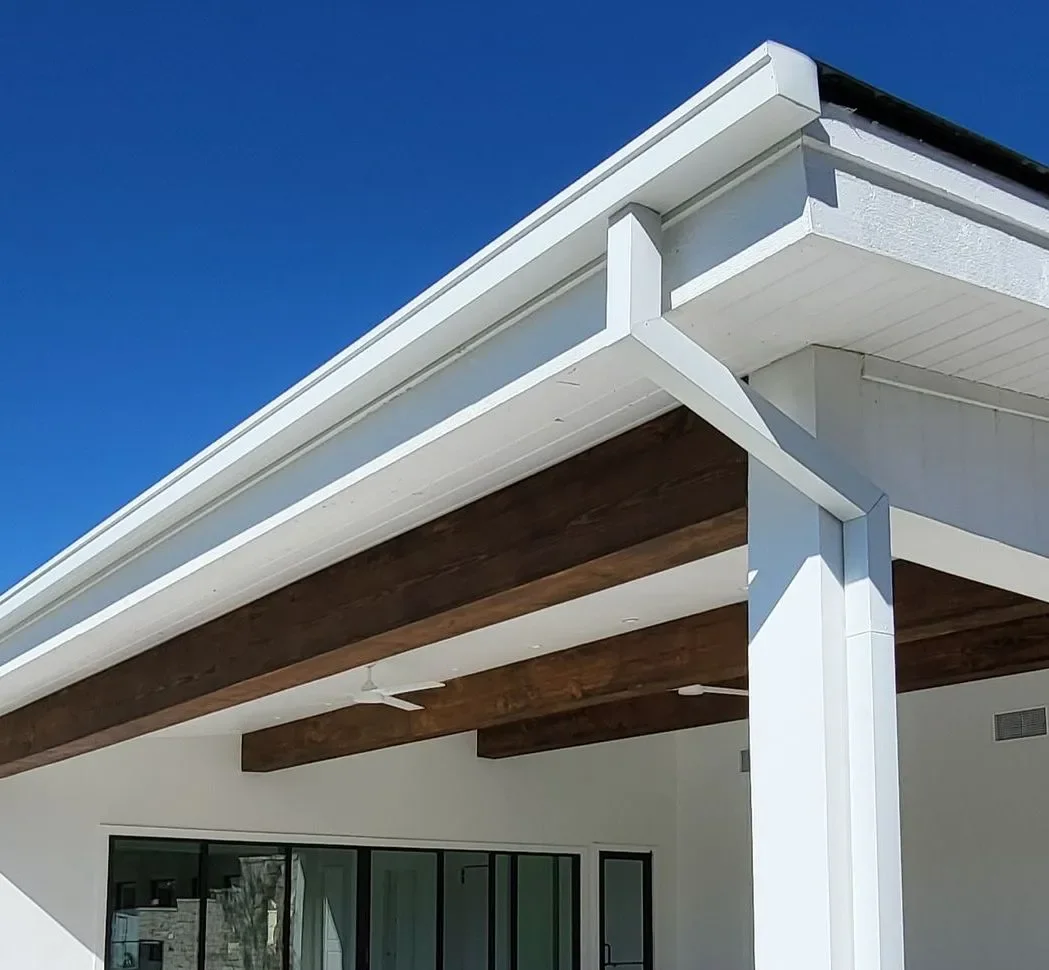
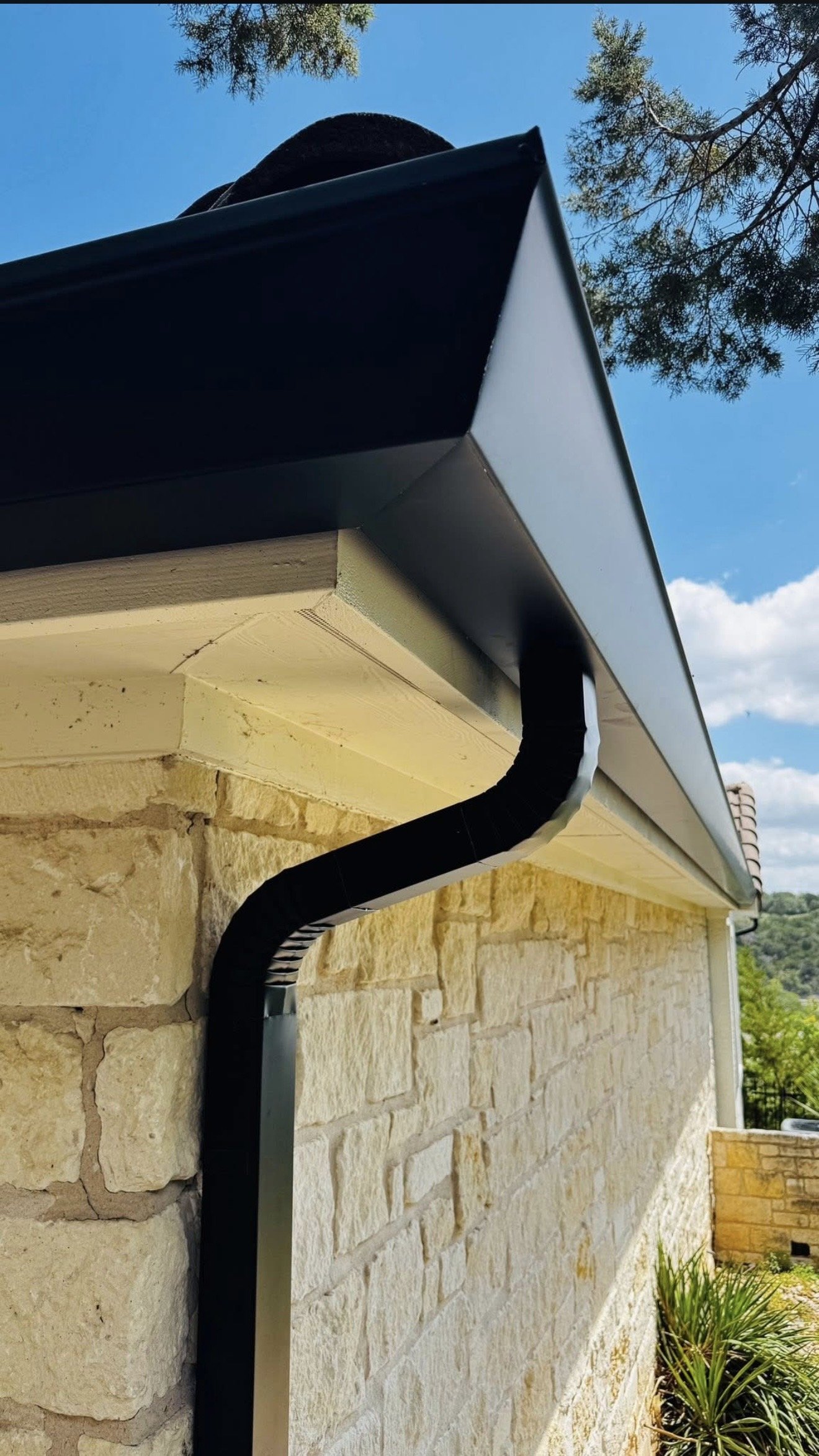
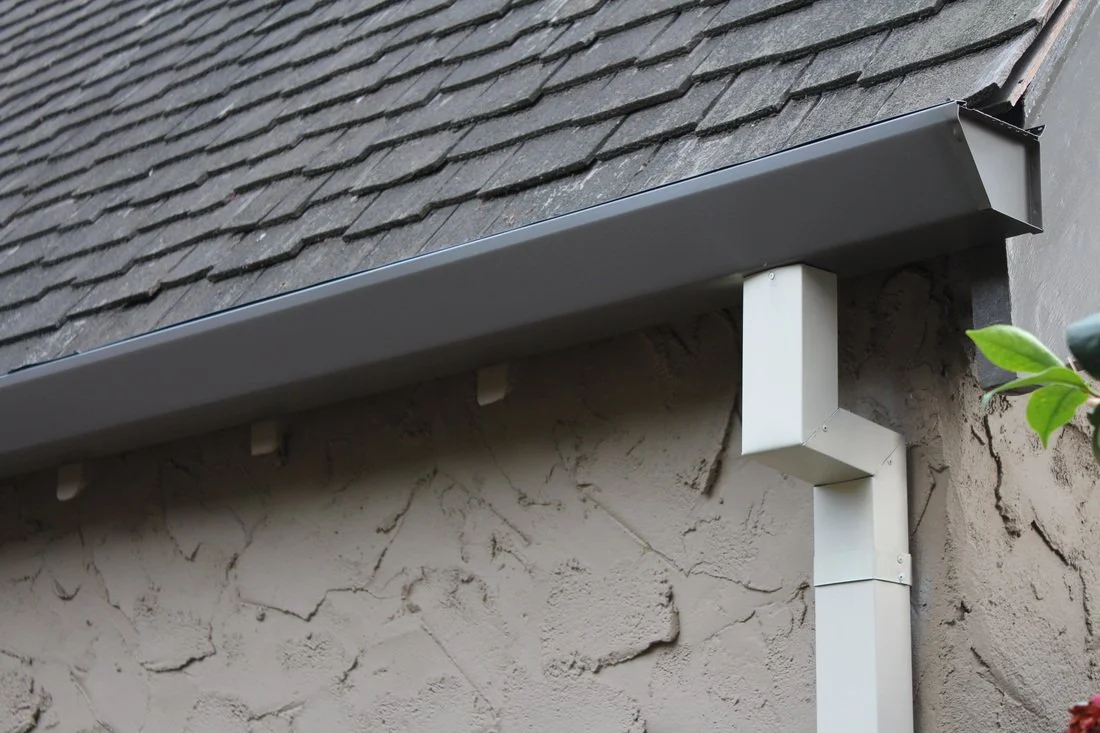
Downspout styles built for your needs.
Traditional Downspout style
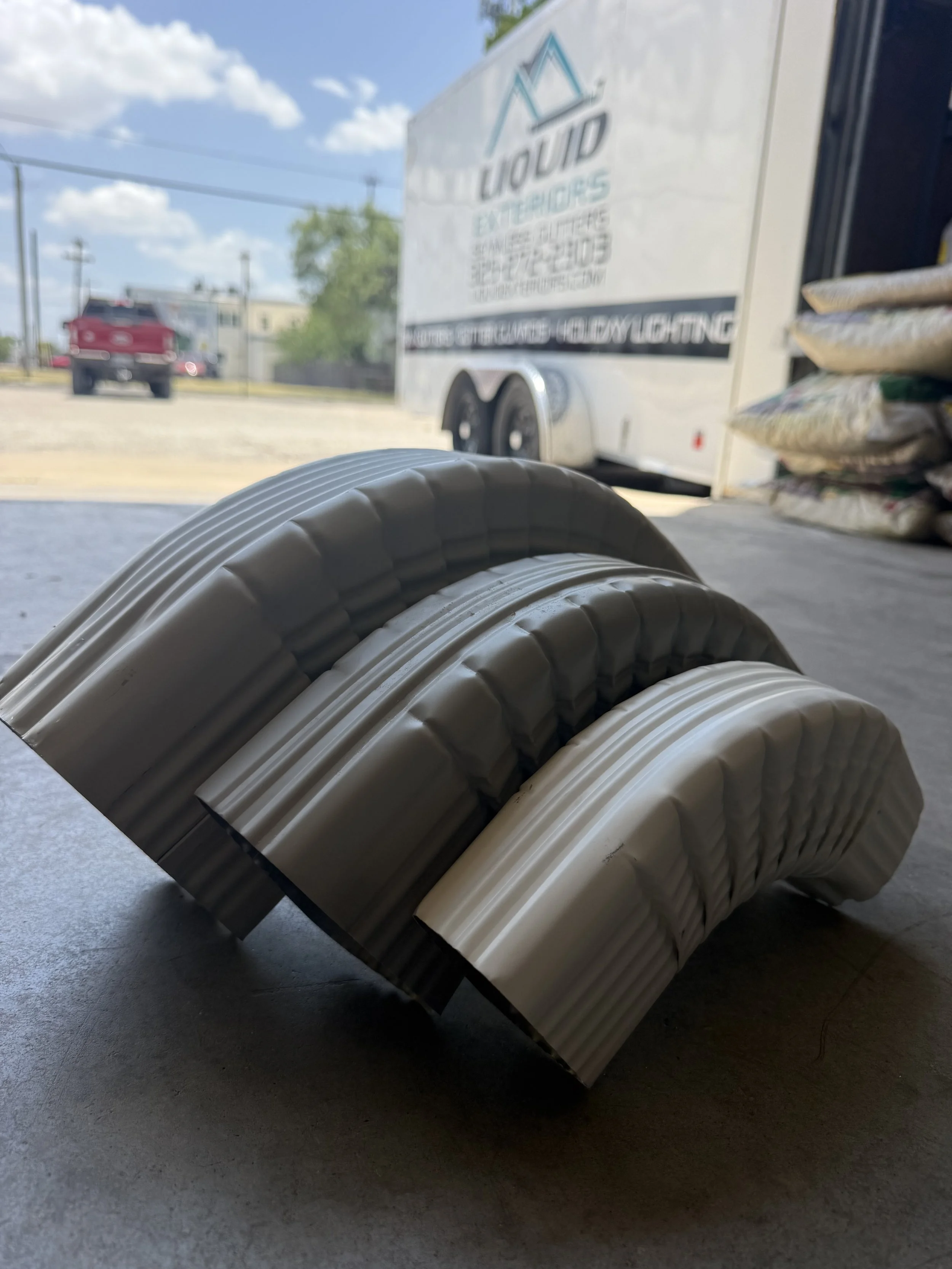
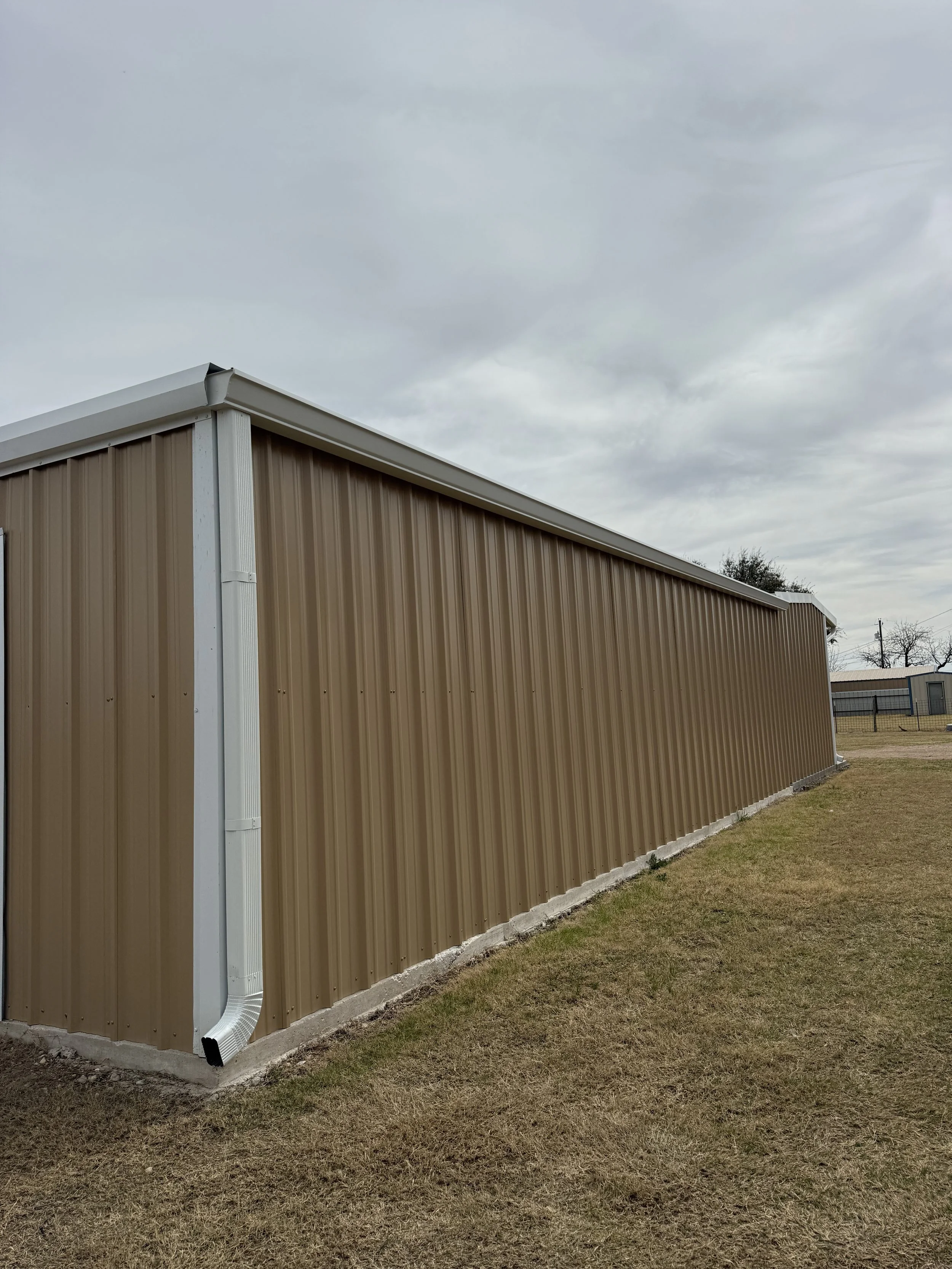
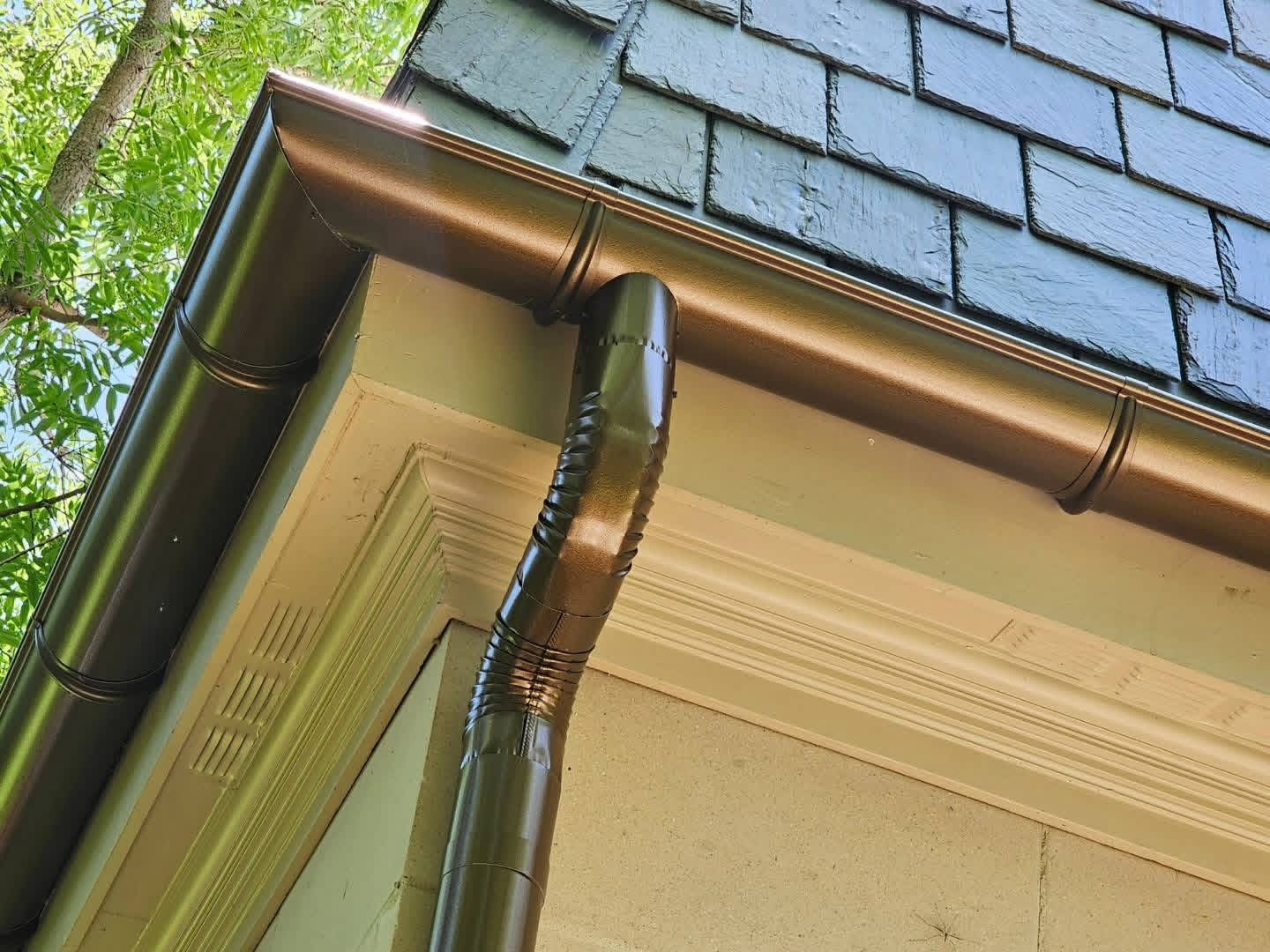
Corrugated downspouts are the tried-and-true workhorse of gutter systems. ribbed construction that adds strength and resists denting, built to move water away from your foundation reliably, season after season..
That added strength doesn’t come at the cost of performance. Corrugated downspouts move water efficiently away from your gutters and foundation, protecting your home’s siding, landscaping, and foundation from water damage and erosion.
• Ribbed design adds strength and dent resistance
• Reliable water flow away from your home’s foundation
• Lower profile cost option compared to premium downspout styles
• Available in colors to match your gutter system
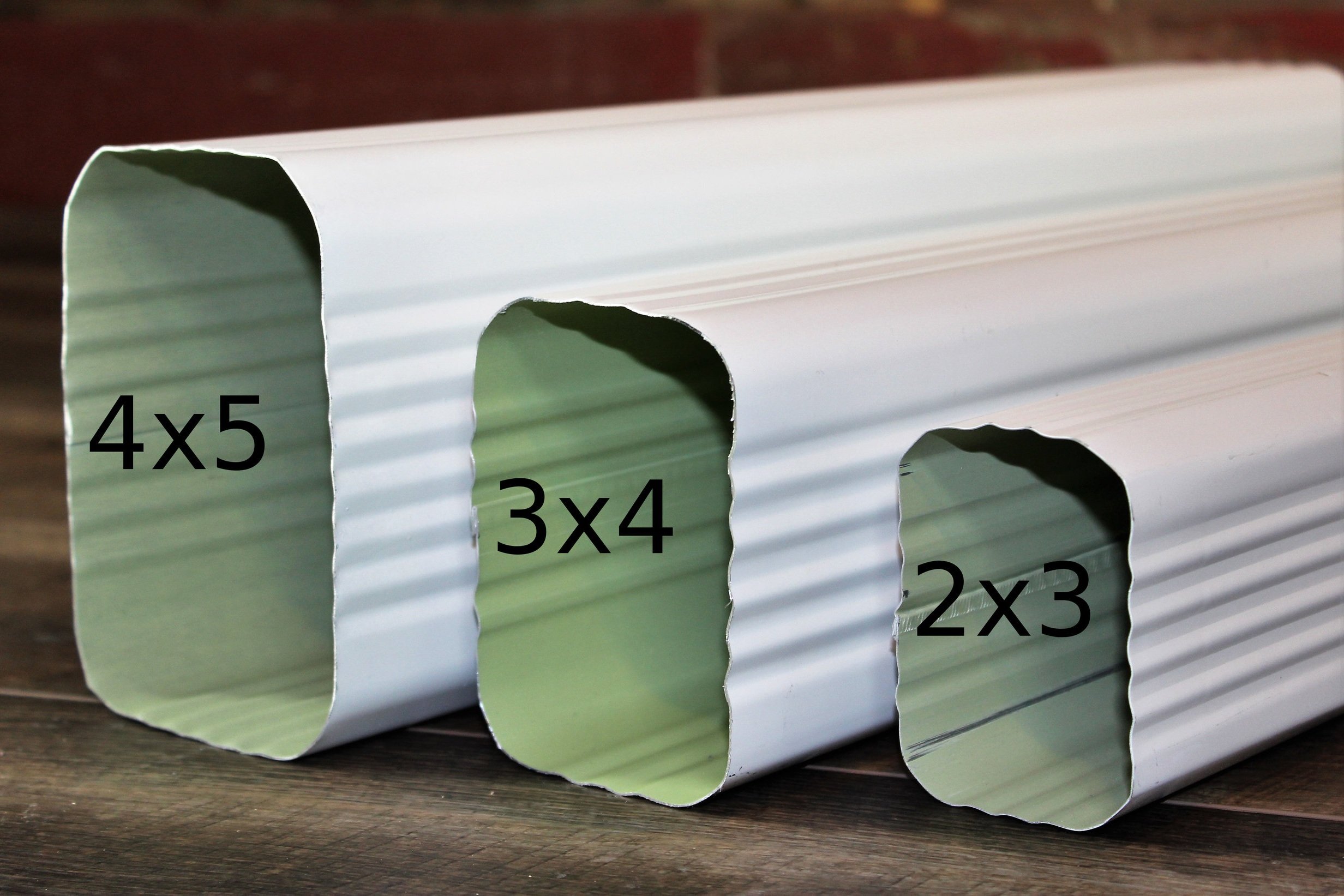
Downspout Sizing: Foundation Protection
Downspout size isn’t just a spec — it’s what determines whether your gutter system can actually keep up during a heavy rain. Here’s how the sizes stack up for maximum foundation protection.
2x3 — Undersized (Not Recommended)
The smallest option on the market, and one we steer clients away from. A 2x3 downspout simply can’t move enough water fast enough during heavier rainfall, leading to overflow, backups, and added strain on the gutter system. It might be cheaper upfront, but it’s a shortcut that costs more in the long run.
3x4 — Standard
The industry-standard size for a reason. A 3x4 downspout handles typical rainfall volumes efficiently, keeping water moving away from your home without the added bulk of an oversized system. This is what we install on the vast majority of homes. Pairs great with Gutter Gate!
4x5 — Oversized (High Volume)
Built for high-volume runoff — large roof areas, steep pitches, or regions with heavy seasonal rainfall. A 4x5 downspout moves significantly more water per minute, reducing the risk of overflow when storms hit hard. Pairs perfectly with our 7” gutters for maximum capacity on larger homes.

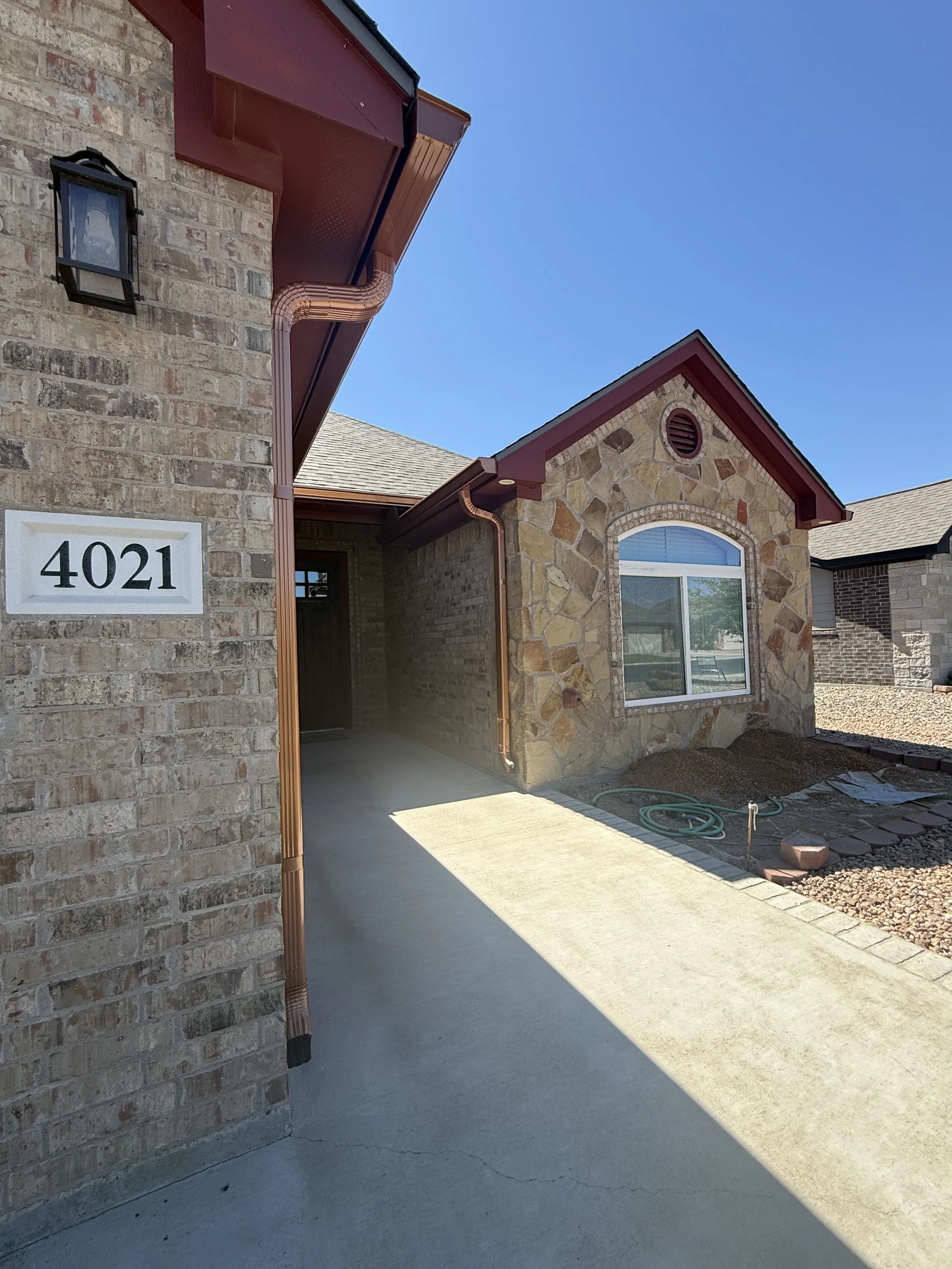
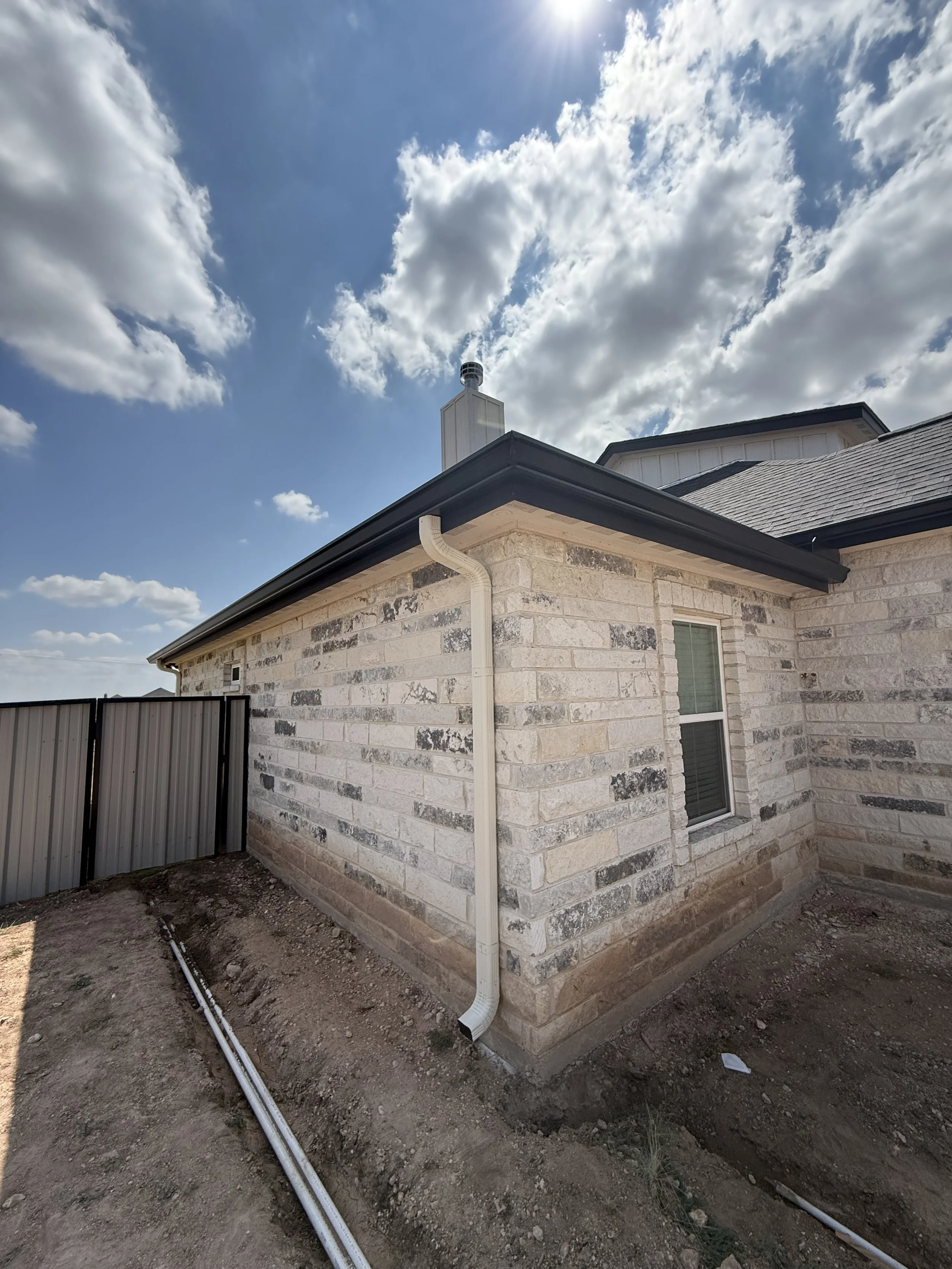
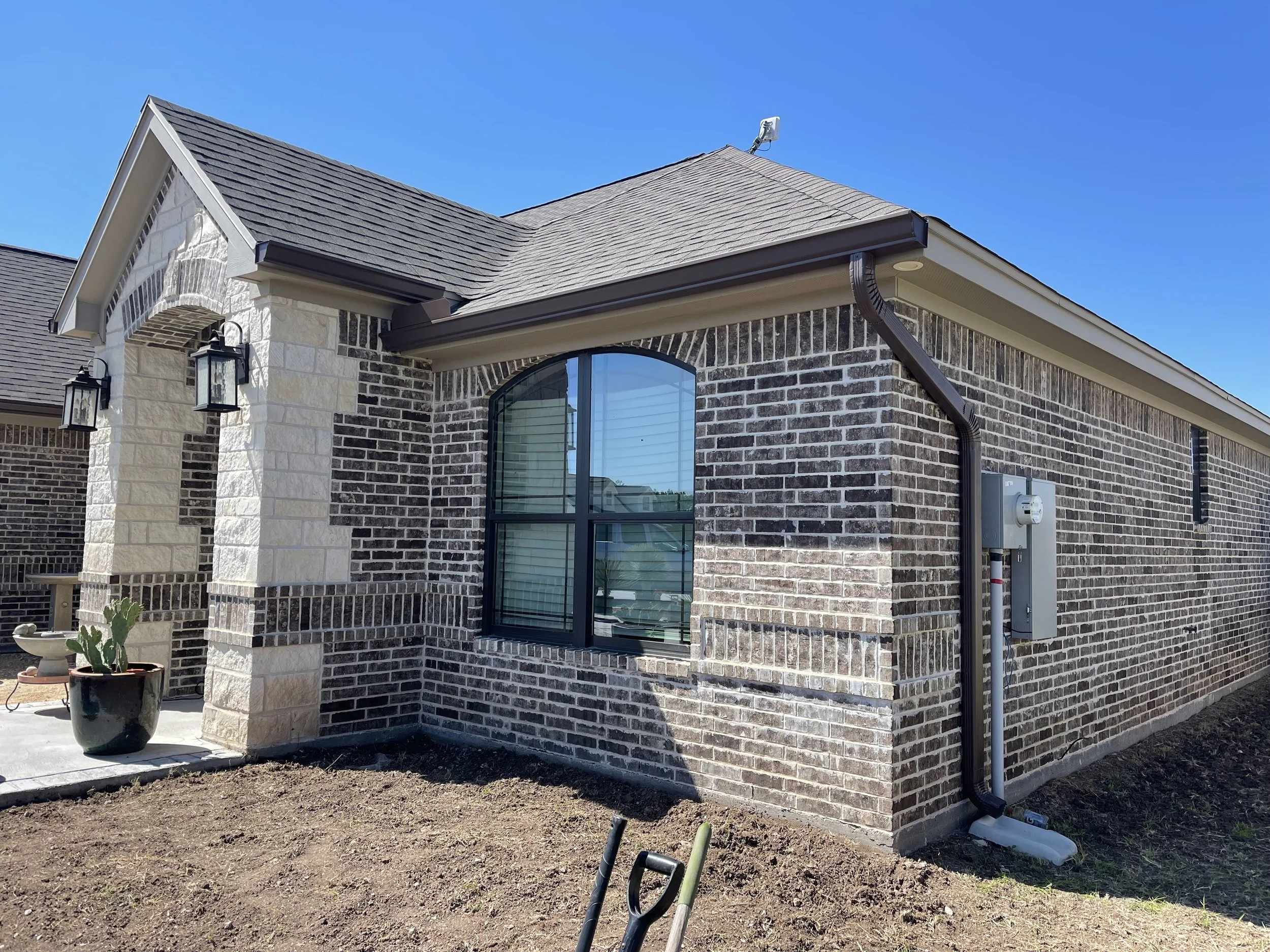
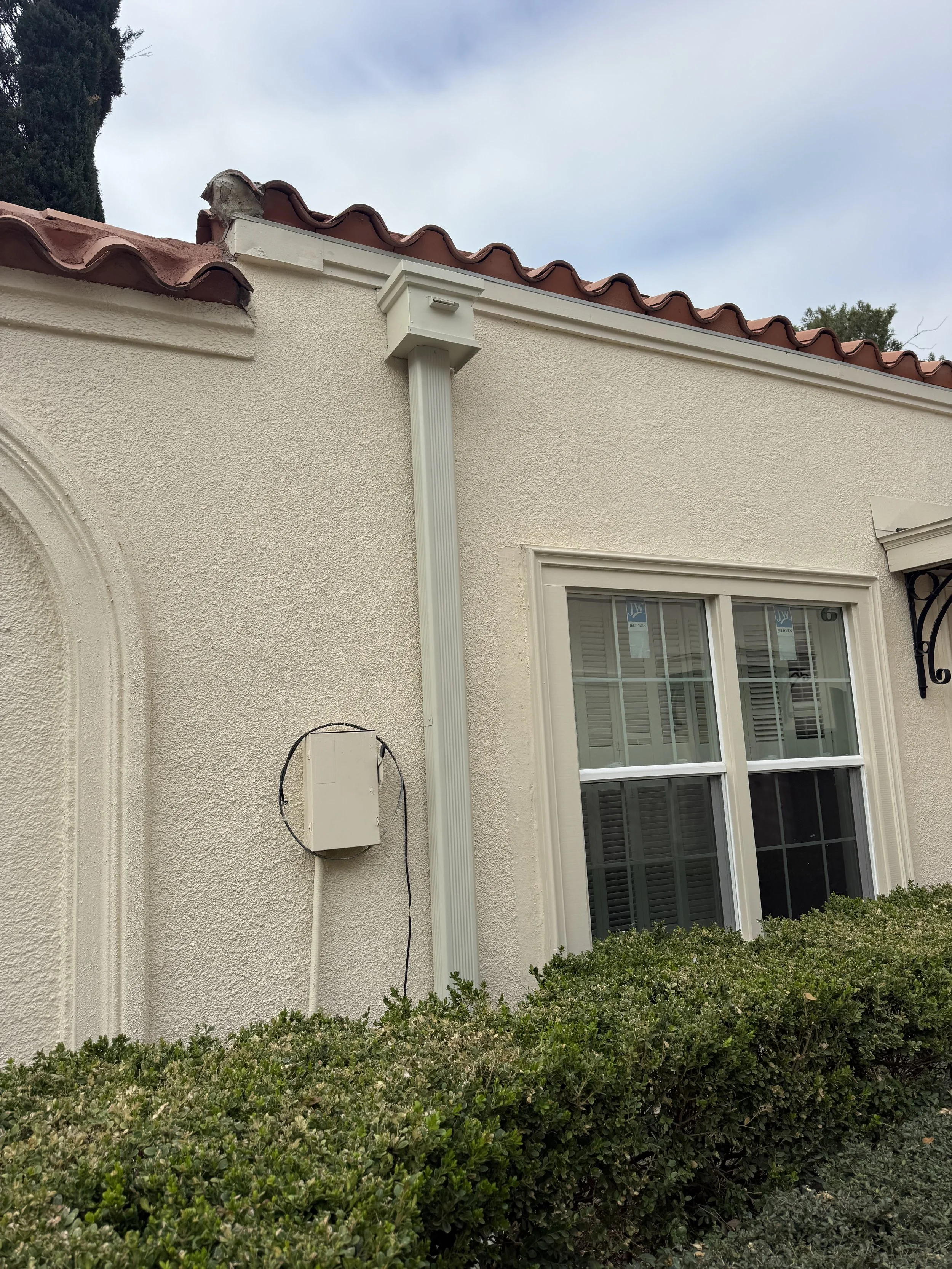
Two-tone Downspouts - No extra cost - Looks Amazing - Built to blend in
Most downspouts are a single color top to bottom, which means somewhere along the run, that color is going to clash with either your gutters or your siding. Two-tone downspouts solve that problem by design — the upper portion is color-matched to your gutters, while the lower portion is matched to your siding or trim, so the downspout blends seamlessly into whichever surface it’s running against.
The result is a cleaner, more intentional look. Instead of a downspout that reads as an obvious add-on, it reads as part of the house — quietly doing its job without pulling the eye. It’s a small upgrade that makes a noticeable difference in curb appeal, especially on homes where the siding and gutter colors don’t naturally match.
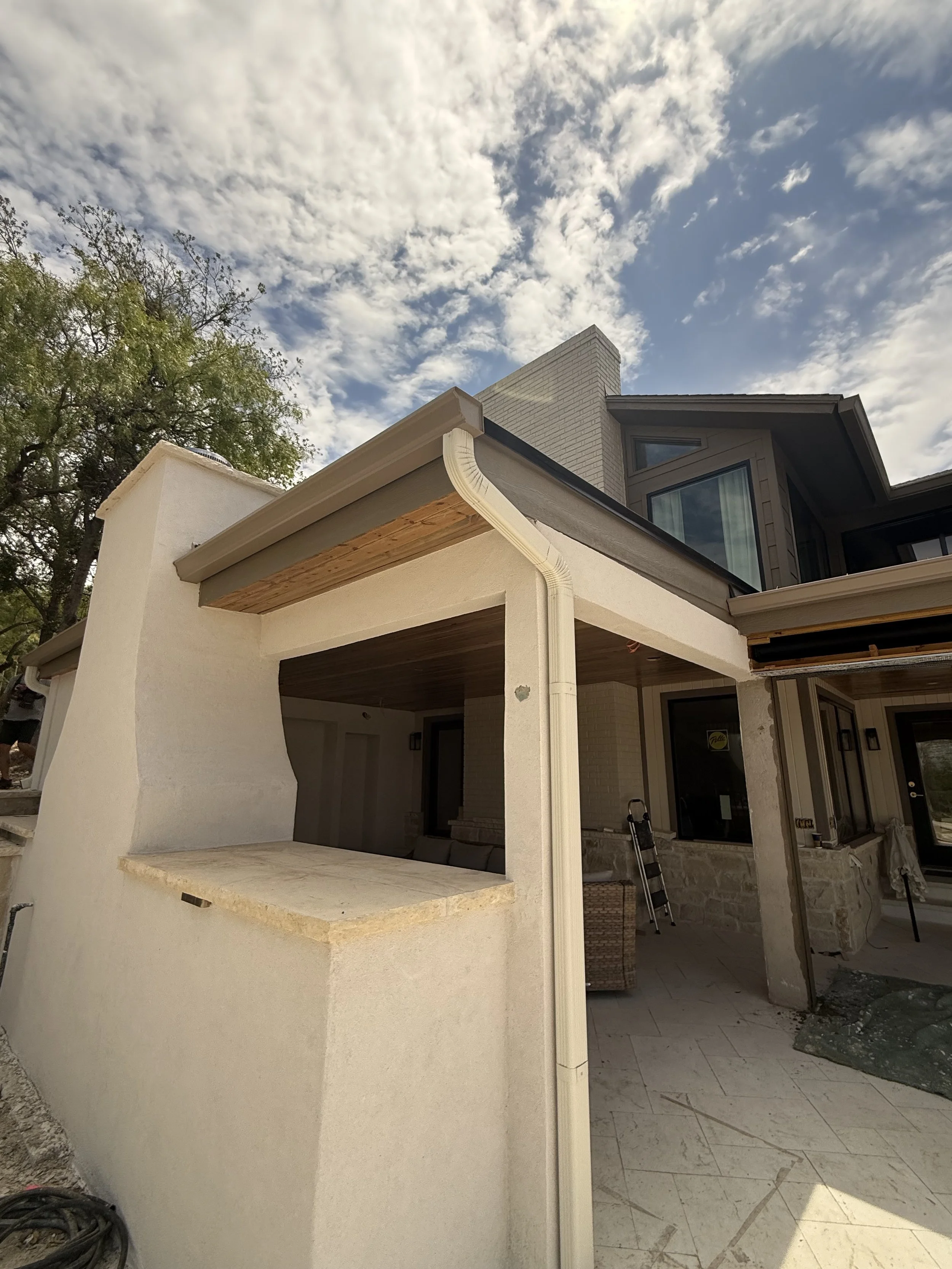
Round Downspouts
Not every downspout has to disappear into the background. Rain chains replace traditional closed downspouts with an open chain of cups or links, guiding water from your gutters to the ground in a graceful, visible flow — turning even a rainstorm into something worth watching.
Beyond the look, rain chains are practical: they reduce splash and erosion at the base compared to a bare downspout, and they work well paired with a rain barrel or dry well for water collection. They’re a popular choice for entryways, patios, and other visible areas where a standard downspout would stand out for the wrong reasons.
We build ours to last — every link and end cap is secured with Loctite during installation, so nothing works loose or rattles free over time. It’s a small detail, but it’s the difference between a rain chain that looks good for a season and one that holds up for years.
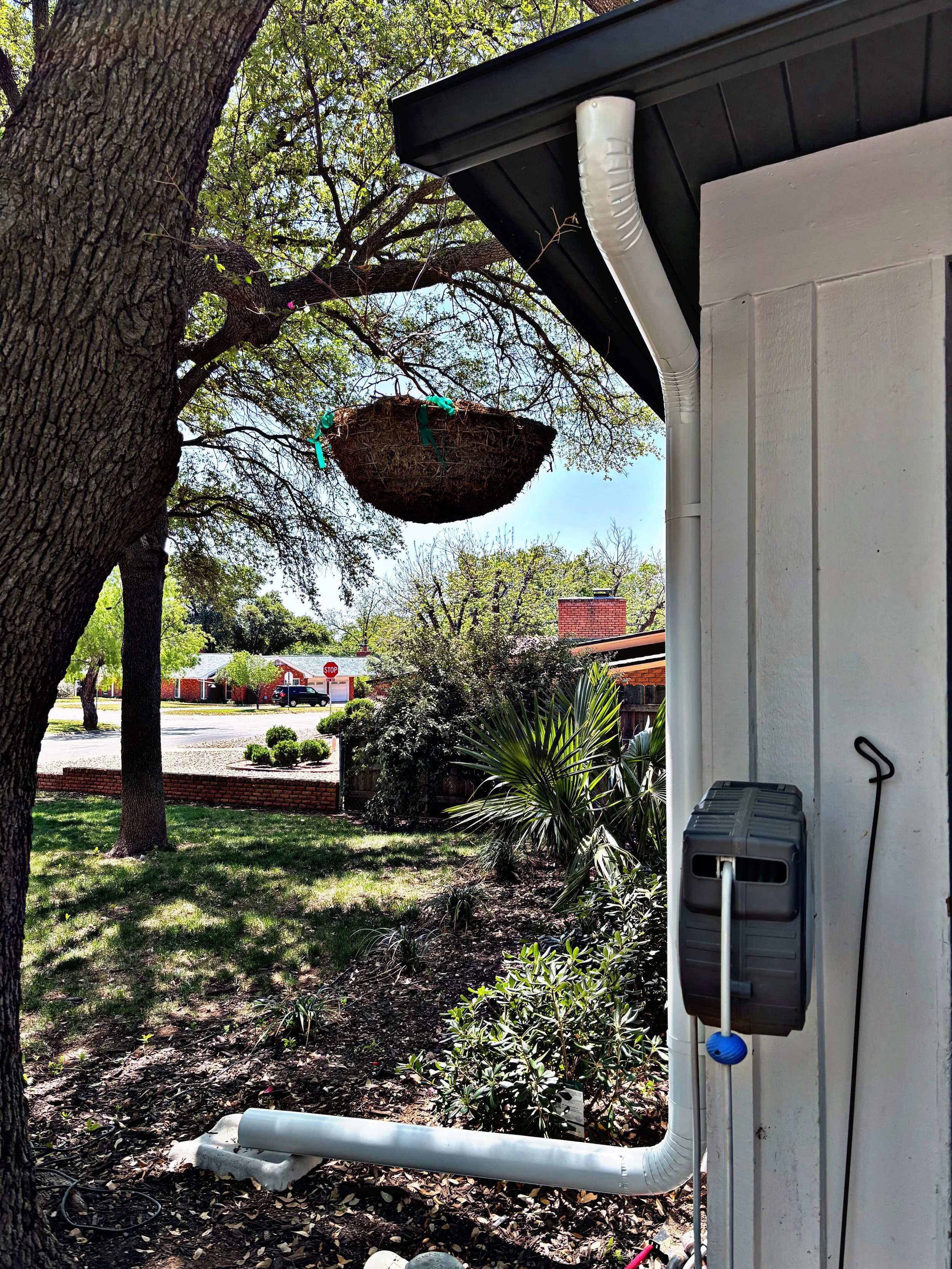
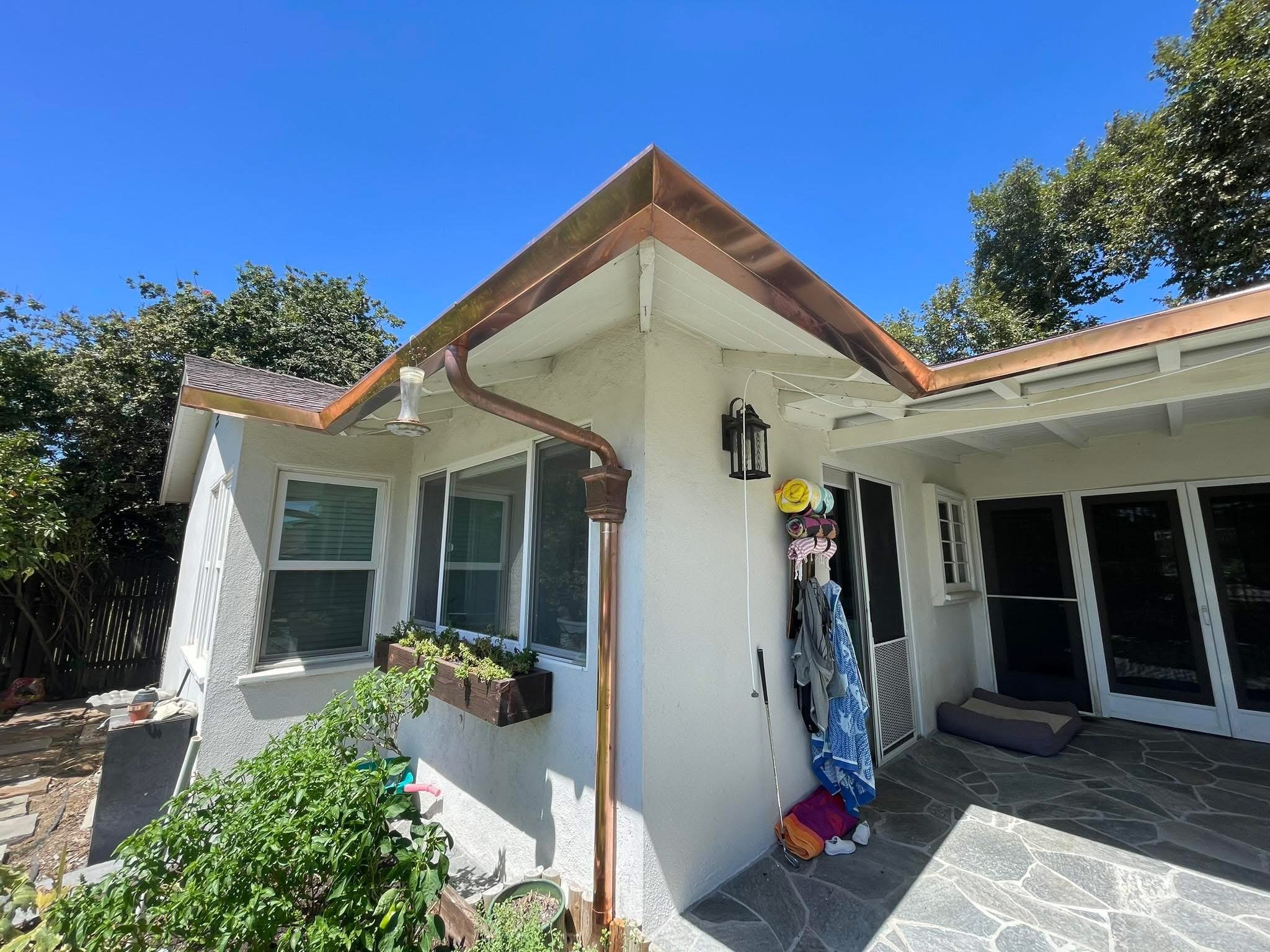
Smooth Downspouts
Not every downspout has to disappear into the background. Rain chains replace traditional closed downspouts with an open chain of cups or links, guiding water from your gutters to the ground in a graceful, visible flow — turning even a rainstorm into something worth watching.
Beyond the look, rain chains are practical: they reduce splash and erosion at the base compared to a bare downspout, and they work well paired with a rain barrel or dry well for water collection. They’re a popular choice for entryways, patios, and other visible areas where a standard downspout would stand out for the wrong reasons.
We build ours to last — every link and end cap is secured with Loctite during installation, so nothing works loose or rattles free over time. It’s a small detail, but it’s the difference between a rain chain that looks good for a season and one that holds up for years.